Culture Drives Capital: The AfroFlame Philosophy
Culture drives capital when identity guides what wealth builds, protects, and transfers. Money can finance an institution, but culture defines its purpose. Capital can expand production, distribution, and reach. Culture gives those systems meaning, trust, and continuity.
These forces are often discussed separately. Culture becomes heritage or entertainment, while capital becomes money and financial return. That division overlooks how economies develop. Values influence ownership. Stories shape brands. Networks affect access. Institutions decide which ideas receive resources and survive.
For Africa and its global diaspora, this relationship carries weight. African culture influences music, fashion, film, food, design, language, and luxury. Yet recognition does not always produce African ownership, income, or control.
Cultural strength becomes lasting economic power through rights, businesses, investment, management, distribution, and institutions. This article examines that process. It considers forms of capital, the African creative economy, intellectual property, diaspora networks, and generational legacy. These choices shape who benefits and what remains for others.
What Does It Mean When Culture Drives Capital?
Culture drives capital when identity, knowledge, and values influence how resources are invested. The relationship becomes economically meaningful through ownership, intellectual property, skilled management, and accountable institutions. Culture creates distinction and context. Capital supplies the capacity to produce, distribute, and preserve value.
The process is neither automatic nor sentimental. A strong cultural idea can remain underfunded. A profitable project can overlook the community that gave it meaning. Durable value appears when cultural knowledge and commercial structure reinforce each other.
Visibility may create attention, but it does not guarantee control. Participation can create income, but it does not always create assets. Lasting value depends on who owns the rights, platforms, businesses, and institutions.
African Identity Is Economic Infrastructure
Culture includes music, clothing, food, language, and ceremony. Those expressions reveal a deeper structure. Culture also includes memory, ethics, family expectations, knowledge, trust, and ideas about responsibility.
These forces influence daily economic choices. They affect which businesses communities support and which leaders they trust. In turn, culture shapes attitudes toward property, inheritance, education, cooperation, and risk. It also influences what families believe they owe future generations.
The African Union’s Agenda 2063 places strong cultural identity within Africa’s development vision. It links heritage, values, creative arts, and cultural businesses with growth and continental transformation.
There is no single African identity. The continent is home to numerous countries, languages, stories and customs. But there are also unique experiences within the diaspora communities. Economic strategy must respect those differences rather than package Africa as one uniform market.
Still, a shared principle remains. Institutions become stronger when people understand what those institutions represent. Identity can guide standards, relationships, and long-term priorities. It can also build trust that financial calculations alone cannot create.
Capital Is More Than Money
Financial capital matters because ideas require funding. Yet money is only one part of the picture.
Communities also hold several connected forms of capital:
- Human capital: skills, health, knowledge, and experience.
- Intellectual capital: research, creative work, designs, and technical ideas.
- Social capital: relationships, trust, and professional networks.
- Cultural capital: heritage, identity, meaning, and recognized knowledge.
- Institutional capital: governance, systems, standards, and durable organizations.
These forms often exist before formal investment arrives. A designer may possess rare cultural knowledge but lack production finance. A community may hold valuable traditions but lack archives or legal protection. A professional network may hold expertise without a structure for joint action.
The central question is therefore larger than funding. Who controls each form of capital? How is it organized? What assets does it create? Can those assets survive beyond one person?
When culture, knowledge, relationships and finance operate together, communities can move from expression toward ownership.
How Cultural Value Becomes Economic Value
Fashion, music, film, art, publishing, food and hospitality or architecture and design are the ways in which cultural value is introduced into markets. It is these sectors that transform meaning into products, services or experiences and intellectual property.
UNESCO’s 2025 global report estimates that cultural and creative industries generate 3.39% of global GDP. They also represent an average of 3.55% of global employment. These global figures confirm that culture now functions as an economic sector.
Creative Industries Turn Meaning Into Market Value:
A luxury African fashion house needs finance for materials, production, staff, marketing, and distribution. Its distinction may come from origin, craft, design language, and cultural memory. Capital helps the business reach customers. Culture gives customers a reason to value it.
UNESCO’s 2023 African fashion report shows strength and structural imbalance. It states that 37 of Africa’s 54 countries produce cotton. The continent exports about $15.5 billion in textiles annually. However, it imports about $23.1 billion in textiles, clothing, and footwear.
That gap does not prove failure. It reveals where value can leave the continent. Raw materials may exit before design, manufacturing, branding, and retail capture higher returns. African ownership must therefore extend further along the value chain.
Film provides another case. UNESCO’s 2021 mapping found that only 44% of African countries had film commissions. Just 55% had dedicated film policies, revealing major gaps in institutional support.
Intellectual Property Determines Who Captures the Return:
Attention can increase demand, but rights determine control. Copyright, trademarks, licensing, and catalogs allow creators to manage reproduction and future income. WIPO explains that creative enterprises use intellectual property to strengthen income streams.
Rights management can also open markets while allowing owners to retain the underlying asset. Without those protections, cultural influence may enrich distributors, platforms, and imitators more than original creators. Visibility may build reputation. Ownership creates an asset that can earn, grow, and transfer.
From African Cultural Influence to African Ownership
African audiences, workers, professionals, and creators participate in global markets. However, participation does not equal ownership. Ownership determines who makes decisions, receives dividends, protects ideas, and benefits from future growth. It takes several forms:
- Equity in businesses and production companies
- Rights to music, film, design, and publishing catalogs
- Ownership of media and distribution platforms
- Property, manufacturing, and technology assets
- Investment vehicles and cultural institutions
Why does African ownership matter? It turns cultural influence into decision-making power, income, employment, and durable assets. Recognition may open a door, but ownership determines who benefits after attention moves elsewhere.
An artist may gain views without controlling the catalogue. A designer may inspire a global collection without owning the pattern. A professional may hold a senior role without equity. A community may shape a platform without owning its infrastructure.
This distinction connects with AfroFlame’s discussion of Africa’s growing role in global markets. The opportunity now involves control across production, finance, rights, and distribution.

Cultural Confidence Strengthens Economic Confidence:
Cultural confidence supports commercial choices. Creators who understand their work’s origin can defend its meaning and price. Founders with a defined identity can build brands without copying outside standards.
This confidence affects negotiation. It encourages stronger contracts, better rights management, and greater investment in African-owned platforms. It does not reject global collaboration.
Confidence must meet discipline. Heritage cannot replace product quality, governance, or customer understanding. Cultural distinction creates advantage only when professional systems can carry it.
Why Culture Needs Capital and Capital Needs Context
Culture requires money, management, technology, legal protection, production, distribution, archives, and succession planning. Talent alone cannot sustain a film studio, fashion house, museum, archive, or educational foundation.
UNESCO’s 2021 film mapping estimated that piracy diverts 50% to more than 75% of sector revenue. The report also found one cinema screen for every 787,402 people across Africa. Those figures show why culture needs infrastructure. Creators require enforceable rights, professional distribution, finance, training, and institutions that protect earnings.
Capital also needs cultural context. An investment can create revenue while weakening local ownership. A development can increase property values while erasing memory or displacing existing cultural activity.
Productive capital builds skills, assets, jobs, and local capacity. Extractive capital captures value without leaving comparable control behind. This does not mean every investment must be philanthropic. It means local knowledge can improve trust, market understanding, legitimacy, and long-term performance. Capital works better when it understands the people and places involved.
The Diaspora Connects Culture, Knowledge, and Capital
African diaspora have financial resources, technical skills or access to institutions and cultural ties. These forms can be used to facilitate investment, mentorship, research or philanthropy and business development.
Financial links already operate at scale, but transfers remain expensive. The World Bank found that sending $200 to Sub-Saharan Africa cost 7.9% in 2023. The global SDG target is 3% by 2030.
Remittances remain important, but diaspora value is wider. The IOM World Migration Report 2026 identifies investment, knowledge transfer, skills, and civic engagement as major development contributions. A professional in Houston may advise a founder in Lagos. An investor in London may support production in Nairobi. A researcher in Toronto may collaborate with an institution in Accra.
These connections become productive when organized through trust, governance, local knowledge, transparency, and shared objectives. Personal goodwill can start a relationship. Institutions allow that relationship to survive changes in leadership or circumstance.
As The Future of Diaspora Wealth explores, organized diaspora networks can turn individual success into shared knowledge, investment capacity, and stronger institutions. The central task is building structures that connect expertise, opportunity, rights, and accountable capital.
Institutions Turn Wealth Into Legacy
Wealth describes what a person or family possesses. Legacy describes what those resources continue to make possible. A company without succession planning may disappear with its founder. A scholarship can help one student. A governed fund can support many generations. An investor can build a portfolio. An institution can teach investment principles and widen access.
Lasting structures may include:
- Businesses with succession and governance systems
- Foundations, scholarship funds, and research centers
- Cultural archives and creative institutions
- Family councils and investment platforms
- Mentorship networks and professional associations
Institutions convert personal achievement into systems. They preserve knowledge, allocate resources, develop leaders, and create standards. Their value lies partly in continuity.
African institutions need not choose between cultural identity and global standards. They can combine local knowledge with accountable governance and can pair African ownership with international reach. They can use modern technology without erasing historical memory.
The Guardian Mindset:
The Guardian principle begins with a simple idea: achievement creates responsibility.
A Guardian asks practical questions:
- What knowledge can be shared?
- Which door can be opened?
- What capital can build?
- Which cultural asset needs protection?
- What structure can survive its founder?
This mindset shifts success from personal status toward stewardship. The Guardian Manifesto develops this principle further by framing achievement as responsibility, stewardship, and service to future generations.
The AfroFlame Philosophy: One Vision, Many Arms
At AfroFlame, we do not treat culture, capital, leadership, ownership, and legacy as separate conversations. We see them as parts of one institutional responsibility. AfroFlame’s public mandate connects cultural authority with economic capacity and generational continuity.
Our Guardianship model centers on cultural authority, economic command, and legacy architecture. We believe relationships should produce more than introductions. They should support partnerships, mentorship, investment, knowledge exchange, cultural preservation, and institution building.
We also believe African excellence should be organized, not merely celebrated. Celebration creates visibility. Organisation builds systems that can protect value and direct resources. The purpose is not to commercialize every tradition. Some cultural expressions deserve protection outside markets.
The purpose is to ensure valuable cultural work has ownership, funding, professional care, and continuity. Culture gives capital a reason. Capital gives culture reach. Leadership connects both to responsibility.
Culture Gives Capital Direction:
Culture is not an accessory to development. It influences what communities build, protect, trust, and transfer. Capital is not the final objective. Its importance rests in what it enables. Cultural influence without ownership may enrich others. Capital without context may separate growth from the communities that sustain it.
The bridge between them includes intellectual property, investment, governance, professional management, distribution, and institutions. These structures turn meaning into assets and assets into continuity.
We believe the defining question is not only how much wealth a generation creates. The deeper question concerns what that wealth protects, builds, and passes forward. Culture drives capital by giving wealth direction. Capital gives culture the capacity to endure. Together, they can build institutions that remain valuable after their founders are gone. One Vision. Many Arms. Endless Impact.
About the Author
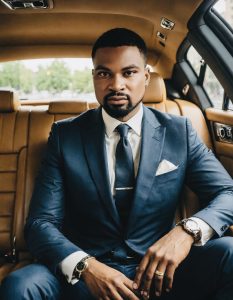
Umar Mohammed is the Founder & CEO of AfroFlame Corp, a Pan-African leadership and cultural platform focused on connecting emerging leaders, accomplished professionals, entrepreneurs, investors, and members of the African diaspora. Through AfroFlame, Umar explores Africa’s evolving role in global business, culture, leadership, and economic development.
Connect with AfroFlame:
Elevating Connections. Empowering Success.
Author: Umar Mohammed
Role: Founder & CEO, AfroFlame Corp
Published: August 2026
Category: Africa | Leadership | Global Affairs | Business